
SURF: Summer Undergraduate Research Fellowship
Paid Undergraduate Summer Research Program in Biomedical and Veterinary Medical Sciences
Louisiana State University School of Veterinary Medicine (LSU Vet Med) in Baton Rouge, Louisiana, is offering paid 10-week summer research internships to undergraduate and recent post-baccalaureate students. Research topics include toxicology, heart disease, lung biology, immunology, infectious diseases, neuroscience, and more. Students will receive mentorship in research and career planning in a multi-disciplinary and collaborative environment. This opportunity is open to 6 to 10 students annually, depending on funding availability and qualified applicant-mentor matching. Applicants can explore opportunities in any of LSU Vet Med’s three departments: Comparative Biomedical Sciences, Pathobiological Sciences, and Veterinary Clinical Sciences.
Benefits
All participants will receive a $6000 stipend for the 10-week program, university housing, and a meal plan. Some travel expenses may be reimbursed, up to $500. Students will be connected to summer researchers in other colleges/departments within the university through the Office of Undergraduate Research, which creates social programs for summer researchers. All LSU Vet Med summer researchers will receive career mentorship from program mentors and administrators.
Eligibility
All undergraduate students currently enrolled in any U.S. college or university as well as recent postbaccalaureate candidates who are U.S. citizens, permanent residents, or possess student or exchange visas (e.g. F-1, H1, H1B, J1, PR, or TN) are invited to apply. Preference will be given to students with a strong academic background in relevant STEM fields. Applications from students belonging to populations that are traditionally underrepresented in the biomedical field are encouraged. Applications for 2026 program are currently closed.
Application
Interested applicants should visit our website for details. Before you apply, you will need a copy of your unofficial transcript, a personal statement of your research interests, and two letters of recommendation. Identification of potential mentors prior to application is encouraged but not required, but please review our research areas so you can indicate your area of interest.
Applications are currently closed.
Research Mentors
Maternal Antidepressant Use During Pregnancy and Offspring Mental Health: Treating depression during pregnancy is important for maternal health, yet questions remain about how fetal exposure to antidepressants may affect the development of brain systems involved in stress and emotional regulation. This project will investigate whether early exposure to a serotonin–norepinephrine reuptake inhibitor changes developmental and stress-related outcomes. The student will use zebrafish embryos to assess development, responses to mild stressors, and genes involved in neural and stress-system maturation. The findings will help identify biological effects that warrant further study in the context of prenatal antidepressant exposure and offspring mental health.
Summary and hypothesis. Mitochondria regulate immunometabolism and promote host defenses against microbial infections. We recently demonstrated that the formation of mitochondrial-derived vesicles (MDVs), which bud off from mitochondria during infection, enhanced macrophage ability to kill bacteria. However, mechanisms that regulate MDV formation during the immune response remain ill-defined. Cardiolipin is a
mitochondrial-specific phospholipid that forms membrane curvatures, which contribute to the formation of the inner mitochondrial membrane cristae. In addition, cardiolipin acyl chain is modified by the acyltransferase Tafazzin (TAZ) to maintain mitochondrial cristae morphology and functions. Importantly, Barth syndrome patients, who have mutations in TAZ, are highly susceptible to bacterial infection. Although membrane curvatures are essential for vesicle formation, the role of cardiolipin and acyl chain remodeling for MDV formation and mitochondria-driven host responses has not been investigated. Thus, there is a gap in our understanding of how mitochondria regulate host immune defenses. The overall goal for this project is to determine the importance of cardiolipin and its acyl chain remodeling for the macrophage’s ability to kill bacteria and induce inflammation. Our central hypothesis is that cardiolipin remodeling regulates MDV formation during immune stimulation to promote macrophage antimicrobial functions.
Our lab studies rodent models of addiction and tries to find novel ways to reduce drug-seeking and/or alcohol-drinking behavior by targeting the brain. Broadly, there are two main divisions: heroin-taking/heroin-seeking behavior in rat models and escalated alcohol drinking in mice. Summer projects could include the investigation of novel targets for addiction based on interventions involving either brain-specific regions, novel pharmacological inhibitors, or diet-induced changes.
Understanding How Breast Cancer Escapes Radiation Therapy: Radiation therapy is an important treatment for breast cancer, yet some tumors survive treatment and later recur or spread. Our laboratory studies the cellular and molecular mechanisms that allow triple-negative breast cancer cells to escape radiation-induced damage. In particular, we are investigating how caveolin-1 and related survival signaling pathways influence the response to radiation and the development of treatment resistance.
The SURF student will join an ongoing research team within a collaborative research environment focused on translational cancer biology and preclinical oncology and participate in a focused project comparing radiation-responsive and radiation-resistant breast cancer models. Depending on project progress and the student’s preparation, activities may include mammalian cell culture, assessment of cell viability and growth, preparation of samples for protein analysis, interpretation of molecular markers, and analysis of tumor-response datasets. The student will learn how to formulate a hypothesis, maintain accurate laboratory records, analyze results, and communicate scientific findings.
Potential Objectives and Expected Outcomes: Characterize changes in breast cancer cell growth or survival following radiation exposure using established laboratory assays; examine selected proteins involved in cell survival and radiation response, including caveolin-1-associated signaling pathways; analyze experimental results and prepare a poster or brief presentation summarizing the findings. The student will receive supervised training in laboratory safety, experimental design, basic cancer biology techniques, data analysis, scientific literature review, and research presentation. No prior cancer research experience is required; curiosity, reliability, and a willingness to learn are essential. The scope of experiments will be adjusted to fit the summer fellowship period and available laboratory resources.
Pathogenesis of Pulmonary Diseases: The overall research goal of the Lung Biology Lab is to understand the molecular and cellular mechanisms responsible for neutrophil recruitment, priming, and activation in infected lungs, smoke-exposed lungs, and smoke-exposed lungs and organs followed by infection in the lungs and other organs/tissues.
Pathogenesis of Sepsis: The overall goal of this research is to understand the molecular and cellular immunological mechanisms associated with sepsis. We are particularly interested in innate immune molecules, such as TLRs, NLRs and chemokines in the induction of sepsis.
Growing evidence suggests that a parent's lifestyle before conception can influence the health of their children. Our lab uses the fruit fly, Drosophila melanogaster, to study how a father's diet affects the brain metabolism and behavior of his offspring. We have found that when fathers consume a high-fat, high-sugar "Western" diet, their offspring show changes in feeding behavior, activity, and brain mitochondrial function. We are now investigating how this information is passed from father to offspring, with a focus on small RNA molecules (microRNAs) carried in sperm.
The SURF student will work on a defined piece of this question, such as measuring feeding and locomotor behavior in offspring of fathers fed different diets, assessing mitochondrial function in fly brains, or testing how specific microRNAs influence behavior using fly genetic tools. The student will have opportunity to learn fly husbandry and genetics, experimental design, behavioral assays, and core molecular techniques (RNA extraction, qPCR, Western blotting).
Cytotoxic and inflammatory effects of nicotine pouch and e-cigarette aerosol extracts on oral buccal cells: The rapid rise in alternative nicotine delivery systems, particularly oral nicotine pouches and electronic-cigarettes (e-cigs), represents an urgent and evolving public health concern. While manufacturers advertise these systems as less harmful alternatives to conventional cigarettes, the entire scope of their health effects, specifically at the site of first contact, i.e., the oral mucosa, remains poorly characterized. This is important since adolescents and young adults, a growing population of alternative nicotine product users, may be vulnerable to potential adverse outcomes.
The oral cavity, lined by buccal epithelial cells, is the primary biological barrier against external insults occurring by ingestion or inhalation. The unique exposure scenario created by oral nicotine pouches and e-cigs may introduce novel risks, as users may experience extended direct contact with concentrated chemical mixtures, including nicotine, flavoring agents, solvents, and thermal degradation products. Investigating whether nicotine pouch and e-cig aerosol extracts can alter buccal cell viability, induce cytotoxicity and inflammatory pathways, is therefore critical in the assessment of risks to oral health.
Objectives: This summer research project is designed to assess and compare the in vitro cellular responses of human buccal epithelial cells exposed to extracts derived from nicotine pouches and e-cig aerosols. In addition, the project aims to introduce the undergraduate student to toxicology research and critical thinking skills.
(1) To grow and maintain oral buccal epithelial cell cultures (or another similar cell line).
(2) To prepare extracts from commercially available nicotine pouches and e-cig aerosols.
(3) To assess cell viability and cytotoxicity for different concentrations and exposure durations.
(4) To evaluate the expression of genes related to inflammation and oxidative stress (e.g., NQO1, HMOX1, TNF, IFN, IL-6, IL-8).
We expect that exposures to both nicotine pouches and e-cig extracts will result in dose-dependent decrease in buccal cell viability, accompanied by elevated levels of inflammatory cytokines, including IL-6 and IL-8. Also, differential toxicity patterns between nicotine pouches and e-cig aerosol extracts are expected. Further, this project is meant to offer the undergraduate student researcher a hands-on training experience to help build competences in cell culture, toxicology assays, data analysis, and scientific communication.
Do activating MTOR mutations initiate nuclear instability in primary cell lines?: Cancer-associated mutations may promote tumor evolution by generating genomic diversity as well as by increasing cell growth. Preliminary studies show that primary guinea pig salivary-gland-derived cells carrying the activating MTOR S2215F mutation develop
frequent multinucleation and abnormal nuclear remnants, suggesting a possible role for mTOR hyperactivation in mitotic or nuclear-envelope failure. This three-month project will compare parental or mock-edited cells with MTOR S2215F, TP53 G245S, and double-mutant populations to distinguish instability initiation from checkpoint escape. The student will verify editing and pathway activation, quantify multinucleation, abnormal nuclear bodies, and centrosome number, and use Incucyte live imaging with H2B-GFP and mCherry-NLS to track chromatin and nuclear-compartment integrity over time. DNA-content profiling and metaphase chromosome counts will test whether these abnormalities produce persistent polyploid or aneuploid descendants. The project will provide preliminary evidence for a model in which MTOR S2215F creates nuclear instability and TP53 G245S permits survival and evolution of abnormal cell populations.
Research Area: Cancer Biology; Targeted Protein Degradation: Targeted protein degradation is an emerging approach that harnesses the cell’s natural protein disposal machinery to eliminate disease-associated proteins. Our laboratory develops degraders for proteins that are difficult to target with conventional drugs, particularly transcription factors involved in cancer.
We design peptide binders derived from the interaction interfaces between target proteins and their binding partners, then fuse these binders to E3 ubiquitin ligases to create biological proteolysis-targeting chimeras (bioPROTACs). These bioPROTACs promote the attachment of ubiquitin chains to target proteins, marking them for destruction by the proteasome. In parallel, we are identifying short peptide motifs called degrons that act as degradation signals. Linking these degrons to target-binding peptides offers another potential strategy for promoting target protein degradation.
SURF students will gain hands-on research experience by validating bioPROTACs and degrons recently identified in our laboratory. Applicants interested in the Su Lab should have foundational coursework in cell biology and biochemistry. Prior laboratory experience is preferred.
Contact
Stephen Costin, Ph.D.
Research and Graduate Education Manager
LSU School of Veterinary Medicine
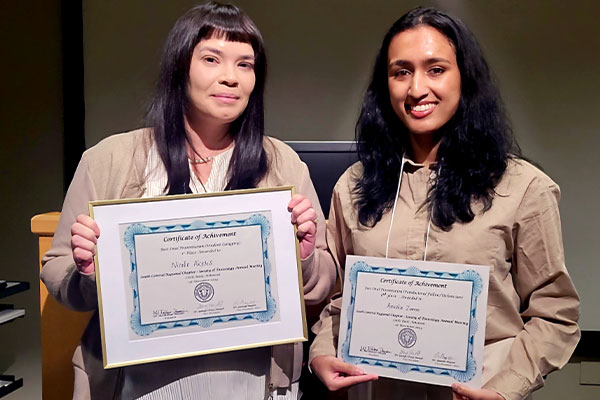
DVM/PhD student Nicole Akers and Anusha Zaman, undergraduate student, received presentation awards at the South Central Chapter of the Society of Toxicology meeting.
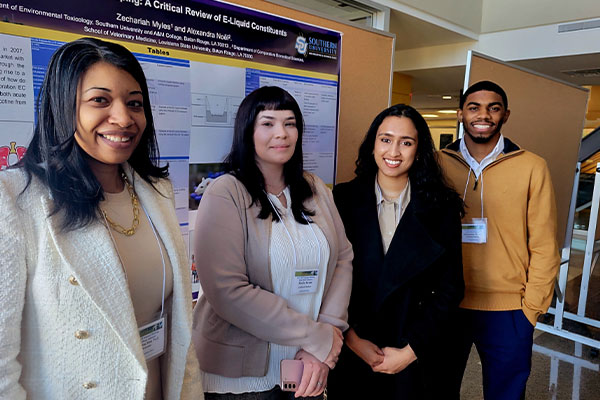
LSU Vet Med researchers attended the South Central Chapter of the Society of Toxicology meeting.